Table Of Content

The goal of UDL is to use a variety of teaching methods to remove any barriers to learning and give all students equal opportunities to succeed. It’s about building in flexibility that can be adjusted for every student’s strengths and needs. In order to correctly apply universal design for learning in the classroom, it’s important for teachers to be aware of the strengths and weaknesses of each student. Curriculum planning for every student in every classroom professional learning supports K-12 teachers effectively plan to optimise learning for the full range of students.
See examples of how others have applied UDL
It’s about building in flexibility that can be adjusted for every person’s strengths and needs. When teaching, I aimed to address many barriers before we began a unit. Sometimes students didn’t have background knowledge, so we’d cover relevant topics and skills at the start.
Ways to Create an Inclusive Reading and Writing Program
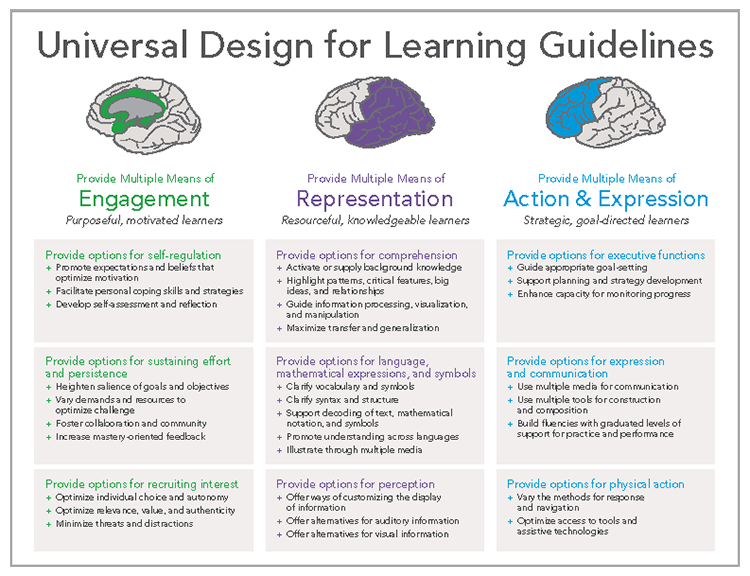
I recently heard an adult tell me she would drop out of classes that required public speaking (presentation recordings) as it caused so much anxiety. Other individuals may struggle with organizational abilities (executive function disorders) and those that have language barriers, may need alternate ways of expressing themselves. Following these principles will inspire you to develop new ways to engage learners that you may not have considered in depth before. As a result, you will improve and increase the impact & accessibility of your course for all students.
UD Resources
Helping Every Student Become an Artist Harvard Graduate School of Education - Harvard Graduate School of Education
Helping Every Student Become an Artist Harvard Graduate School of Education.
Posted: Wed, 24 Jun 2020 07:00:00 GMT [source]
When viewed in a positive light, this international flair can boost the atmosphere of a classroom and make it more inclusive. It’s true that some students will have more trouble with certain aspects of a lesson than others. But, instead of simply getting frustrated and giving up, students need to know when to ask for help. This involves providing multiple ways to assimilate subject material, such as textbooks, audio files, digital books, or images and graphs. It also implies customization and flexibility within those formats.
Plus, they’ll become more familiar with the flexible tools and strategies available to them. Lesson planning with UDL will become more automatic and will help the full range of students to become expert learners. The UDL Guidelines are a tool used in the implementation of Universal Design for Learning.

The UDL Guidelines are a tool used in the implementation of Universal Design for Learning, a framework to improve and optimize teaching and learning for all people based on scientific insights into how humans learn. Learn more about the Universal Design for Learning framework from CAST. The UDL Guidelines can be used by educators, curriculum developers, researchers, parents, and anyone else who wants to implement the UDL framework in a learning environment.
At the core of the UDL framework is providing students with the individualized support they need to succeed. UDL gives you a framework to follow so you can reduce the barriers to learning. The main way to do this is to prepare a learning environment where students have what they need to flexibly meet learning goals. This approach to teaching doesn’t specifically target kids with learning and attention issues. But it can be especially helpful for the 1 in 5 kids with these issues — including those who have not been formally diagnosed.
Following the information above, teachers should now be aware of how their students learn best. This could mean getting some bean-bag chairs or exercise balls, or even standing desks, mats for the floor, or stools with high-top tables. Flexible seating helps students who have trouble sitting in one place, and gives all students the ability to choose their best workspace. That way, students know exactly what to expect from the lesson, and will feel more motivated to pay attention to complete the lesson goal. With this kind of flexibility, students have access to the material that best suits their needs. This is useful for children with disabilities such as dyslexia, as well as for average students who simply perform better when listening to instruction than when reading, for example.
What are the three principles of UDL?
Designing for Accessibility: How to Front-Load Your Digital Content with UDL Principles - Faculty Focus
Designing for Accessibility: How to Front-Load Your Digital Content with UDL Principles.
Posted: Wed, 04 Mar 2020 08:00:00 GMT [source]
Universal Design for Learning (UDL) is a framework that guides educators in designing learning experiences that meet the needs of all learners. It helps teachers move from a one-size-fits-all approach toward one that adapts to learner variability. UDL embraces the idea that we should have firm goals for students—using flexible means to reach those goals.
One simple but effective way to do so is by stocking your classroom library with books that reflect your students’ diverse backgrounds and experiences. You may, for example, have a student in your class with attention-deficit hyperactivity disorder. Ways to reduce barriers could include helping them set a routine, learning more about their needs from their family, or referring them to a school specialist. As a teacher, one of the best ways to help students is by reducing barriers to learning. One approach that can help you achieve this is the Universal Design for Learning. UDL brings that approach to the classroom or to workplace training.
UDL helps build in more ways a diverse group of learners can access information and show what they know. Even if you’re not familiar with the term universal design, you’ve likely encountered it in your everyday life. Common examples include automatic doors and dictation tools on smartphones.
It’s all about believing—in students and their potential; in the importance of the process as much as the result; and in the power of continual growth, reflection, and lifelong learning. What does a course look like that has considered Universal Design for Learning in the design phase? It will incorporate these three main principles of UDL, developed by CAST, a non-profit educational research and development organization. The mission of the organization is to transform education design and practice until learning has no limits. Assure families that you have high expectations for all students to become expert learners in your classroom. And explain that you’ll keep working with the students and their families to build the skills and interest to make that happen.
This approach offers flexibility in the ways students access material, engage with it and show what they know. Developing lesson plans this way helps all kids, but it may be especially helpful for kids with learning and attention issues. Inclusive instructional design provides greater opportunity for learners to engage in learning and fully demonstrate their knowledge, understanding and skills. Using the Universal Design for Learning principles to proactively plan teaching and learning programs will reduce the need to retrospectively plan individual accommodations and personalised adjustments.


No comments:
Post a Comment